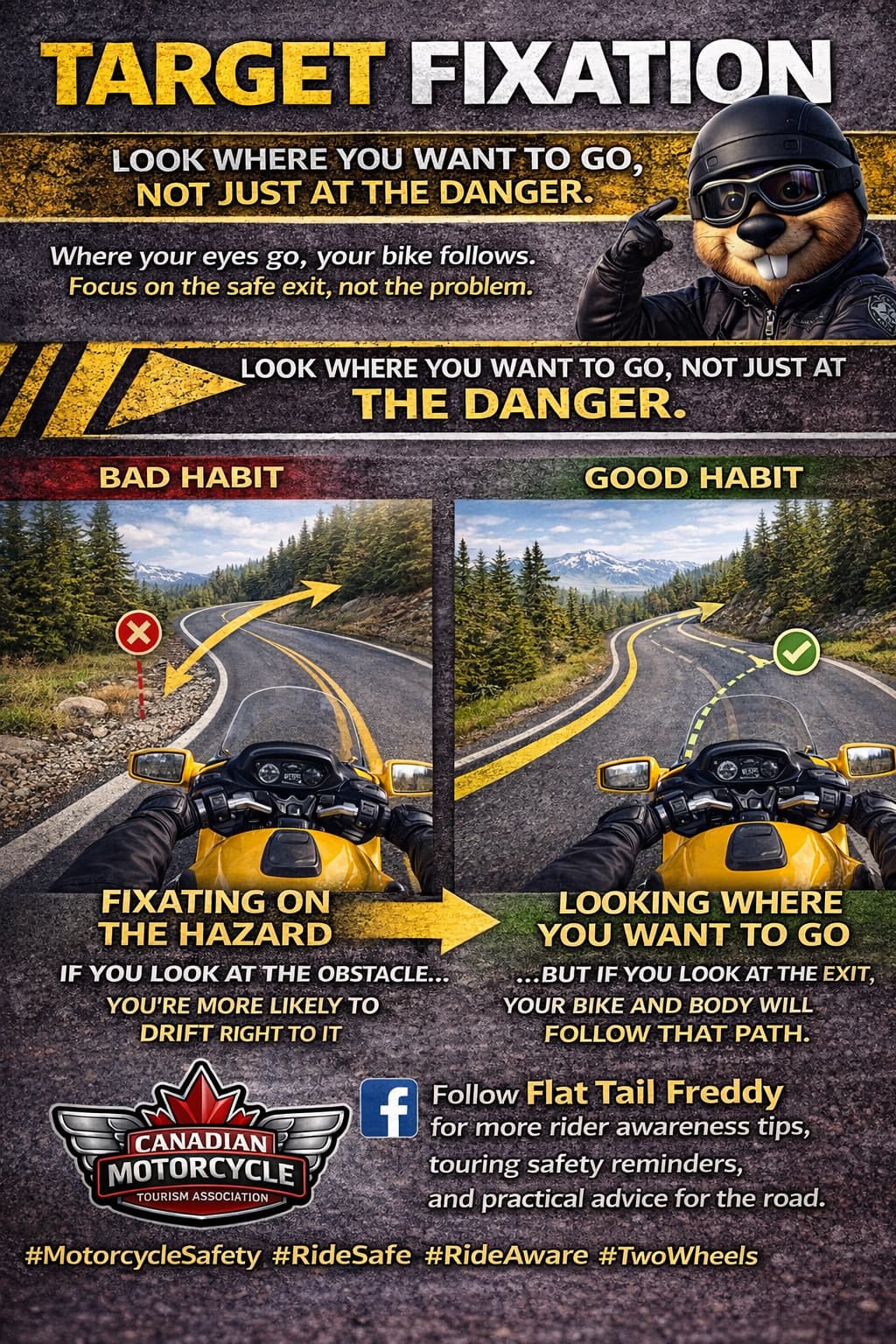

Target fixation is one of the most common and dangerous traps in motorcycle riding. It happens when a rider locks their eyes onto the thing they want to avoid instead of the path they want to take. That might be gravel in a corner, a pothole, a guardrail, a deer at the roadside, or the bumper of a vehicle ahead.
The problem is simple: where your eyes go, your attention and body often follow. On a motorcycle, that matters. If you stare at the hazard, you are more likely to tense up, make poor steering inputs, and drift toward the very thing you were trying to miss.
What Target Fixation Looks Like
Target fixation usually shows up when a rider feels surprised, pressured, or overwhelmed. Instead of scanning and choosing a safe line, the rider becomes visually locked onto the problem.
Common examples include:
- Staring at loose gravel in a curve
- Fixating on a pothole instead of the clear pavement beside it
- Looking at the vehicle you think might pull out
- Locking onto the ditch, curb, or guardrail in a turn
- Watching wildlife at the shoulder instead of your escape path
In each case, the rider may know what the hazard is, but they stop looking where they actually need to go.
Why It Happens
Target fixation is often a stress response. When something feels threatening, your brain wants to focus on it. That may help in some situations, but on a motorcycle it can work against you.
It happens more often when riders are:
- Entering a corner too fast
- Riding while tired or distracted
- Dealing with traffic pressure
- Surprised by road conditions
- Lacking confidence in a situation
Once a rider fixates, they often get stiff in the shoulders and arms. That tension can lead to abrupt braking, poor line choice, or overcorrecting. Instead of staying smooth and balanced, the rider becomes reactive.
How It Affects Control
Motorcycles respond best to calm, steady input. Good riding depends on vision, balance, and smooth decision-making. When target fixation takes over, all three can suffer.
A rider who fixates may:
- Miss the safer line through a turn
- Drift wide in a corner
- Brake suddenly while leaned over
- Freeze instead of making a controlled adjustment
- Lose valuable time and space
This is especially important on spring and summer rides, when riders may face construction zones, rough shoulders, wildlife, tourist traffic, and changing road surfaces. A small visual mistake can quickly turn into a bigger riding problem.
How to Avoid It
The best way to avoid target fixation is to train your eyes to stay focused on the safe path, not the hazard.
A few practical habits help:
- Keep your eyes up and scan well ahead
- Look through curves, not at the edge of the road
- Turn your head toward your intended path
- Slow down early so you have more time to choose
- Leave extra space in traffic and around hazards
- Practice spotting escape routes before you need them
It is fine to notice a hazard. In fact, you should. The key is to identify it, then shift your focus to where you want the motorcycle to go.
A Simple Example
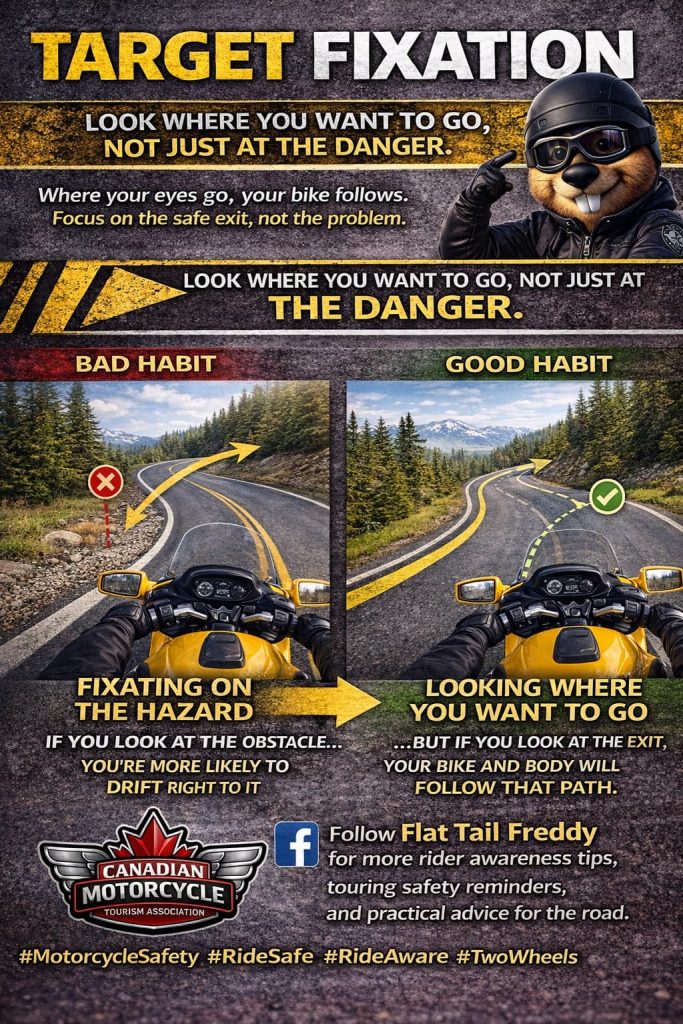
Imagine you enter a curve and see gravel near the outside edge. If you stare at the gravel, you may tense up and run wide. If you look through the turn at the clean line, your body and bike are much more likely to follow that safer path.
The same thing can happen in traffic. If a car starts moving into your lane, do not lock onto the vehicle. Look toward your open space or escape route while making your next controlled move.
Train the Right Habit
Target fixation can happen to any rider, especially under pressure. The goal is not perfection. The goal is building a better habit before the pressure hits.
Remind yourself:
- Spot the hazard
- Stay calm
- Look where you want to go
- Make smooth inputs
That short mental reset can make a big difference.
Final Thought
Target fixation is not just about eyesight. It is about attention, control, and decision-making. Riders who train themselves to look toward the safe path give themselves more room to react and a better chance of staying balanced and in control.
Ride aware. Keep your eyes up.
Focus on the path that gets you home safely.
Follow Flat Tail Freddy, the Safety Dude of the Canadian Motorcycle Tourism Association, on Facebook for more motorcycle safety tips, rider awareness, and road-ready advice.
https://www.facebook.com/flattailfreddy
For more Rubber Tire Community Events, visit:
https://canadianmotorcycleevents.com/
#StaySafe #RideSafe #RideAware #TwoWheels