First Gravel Run of the Season — What BC’s Backcountry Looks Like When It Wakes Up
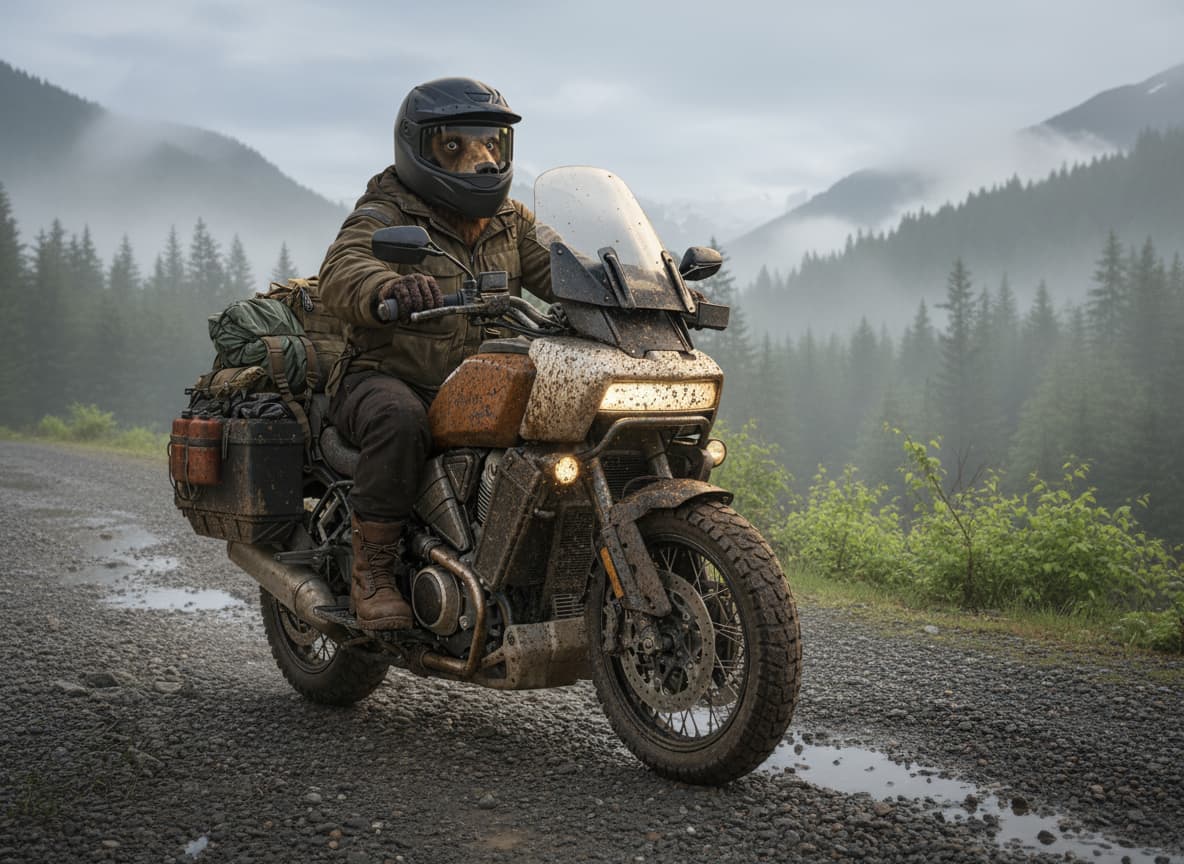
Every spring, same ritual. I air up the tires — both of them, because winter sitting drops pressure in a way that surprises you — lube the chain, check the brake fluid hasn’t gone the colour of old tea, and take the Pan American out on a familiar gravel road I’ve done a hundred times.
Not to see anything new. Not to cover distance. To find out who we both are after winter.
That’s the first gravel run. It’s reconnaissance. It’s also, if I’m being honest, one of my favourite days of the year.
What BC’s Backcountry Actually Looks Like in May
There’s a version of “spring riding” that looks like a soft-focus magazine spread — green meadows, wildflowers, warm sunshine, empty roads.
That version exists here. It arrives, depending on elevation, sometime between late May and mid-June.
Early May is different.
Early May in BC’s backcountry is mud season wrapping up and gravel season opening, and the distinction matters. The roads that were maintained over winter look surprisingly rough — frost heave has done work on anything with a hard surface, and the transition between graded gravel and paved sections is often where the worst damage shows. Potholes appear overnight when the freeze-thaw cycle finishes its last few rounds.
The gravel roads themselves, if they’ve been properly graded in fall, often come through better than the paved shoulders. Gravel drains; asphalt holds water and then shatters when it freezes. Your backcountry FSR might be in better shape than the highway leading to it.
The things to genuinely watch for in May:
Soft shoulders. Snowmelt saturates the soil beneath the road surface, which means what looks like a firm shoulder can be soft enough to pull a wheel sideways if you ride onto it. On uphill sections especially, where the rear wheel is under power, a soft shoulder edge can grab and redirect the bike. Stay toward the centre of the road’s worn track.
Creek crossings. Spring runoff. On routes that have culverts or low water crossings, volume is higher in May than any other time of year. Crossings that are trivial in August can be knee-deep in May. Know your route; if you don’t know, walk the crossing before riding it.
Snow above 800 metres. BC’s coastal and interior mountain ranges hold snow at elevation well into May, sometimes June. If your route takes you through a pass, check current conditions — not last week’s conditions. A road can be clear at the bottom and snowed in above treeline.
Logging truck traffic. Spring is active season for many BC forestry operations. Logging roads may have heavy truck traffic on weekday mornings. Listen for air brakes on descents. Keep to the right. Pull well off the road at blind corners if you stop.
The Machinery Check
Winter does things to a bike that sitting in a heated garage can’t entirely prevent. The HD Pan America’s electronics — the IMU, the cornering ABS, the traction control — all wake up clean after winter, but the mechanical items still need checking.
The items I check before the first spring run, in the order I care about them:
- Tires: Pressure and visual inspection. Sidewall cracking from UV and temperature cycling. The Pan America’s Adaptive Ride Height system relies on the suspension working correctly — check that it’s cycling properly through its range before you load the bike.
- Brakes: Fluid colour and level. Lever feel — if it’s spongier than it was in October, bleed before you go, not after.
- Chain and drivetrain: Rust on the chain from condensation. Lube it, ride slowly for 10 minutes, check it again. If it’s past service life, replace before gravel season; chains don’t fail gracefully.
- Lights: Everything. Including the ones you don’t remember using.
- Handlebars, levers, controls: Wiggle everything. Condensation can loosen fasteners over winter.
The first run should tell you something. If it doesn’t feel right, pull over and think about it rather than riding it in.
Reading Gravel in Spring
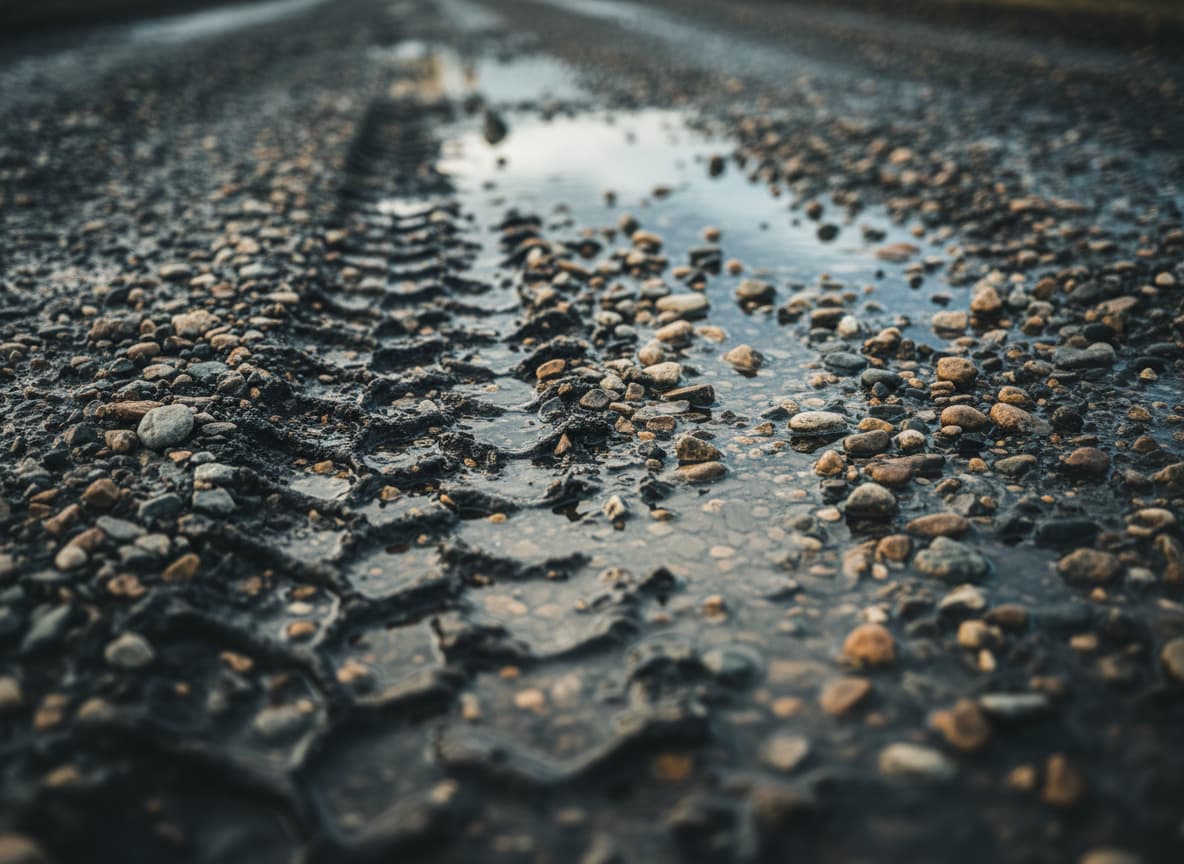
Spring gravel has a specific look you’ll learn to identify: a dull, slightly wet surface that catches light differently than summer-dry gravel. This is the road telling you it’s softer than it looks.
In this condition, cornering margin is reduced — not dramatically, but enough that your summer-speed approach to a familiar corner may produce a surprise. The Pan America’s cornering ABS and traction control are working in the background, but they respond to what’s happening, not what’s about to happen. Enter corners with more caution than the road seems to warrant, especially in the first 30 minutes before your eyes have calibrated to the conditions. Ride the technology as a safety net, not a substitute for reading the road.
Braking: longer distances than summer. The surface friction coefficient on wet spring gravel is lower, and fine stones can act like ball bearings under hard braking. Progressive, early, smooth.
A First-Run Route
The honest answer is that the right first run depends on where you’re starting from. Here are three that I’d recommend, and one of them is my actual backyard.
Fraser Valley and Lower Mainland: Vedder Mountain FSR, Chilliwack
Lower elevation, usually clear of snow by early May, well-graded, and short enough that you can turn around if conditions are worse than expected.
From Chilliwack, head south on Vedder Road, cross the Vedder Canal, and pick up the FSR. The route climbs into managed forest with views back across the Fraser Valley when the trees open up. It’s not dramatic. It’s perfect for a first run — familiar enough to be forgiving, gravel enough to matter.
Distance from Chilliwack: about 25 km out-and-back to the first major junction. Plan two hours, ride slowly, enjoy the fact that you’re out.
Northern BC: Blackwater Road west of Prince George
This is mine. I’ve done it in early May more times than I can count, and it earns its place as a season opener because it’s honest — no showboating, no surprises it doesn’t warn you about first.
Head west out of Prince George on Hwy 16, pick up the Blackwater Road turnoff and follow it as far as conditions allow. The road runs through plateau country — open mixed forest, long sightlines, and enough elevation variation to give the suspension something to think about without committing you to anything serious. Drainage is generally good out here; the plateau sheds water better than the mountain drainages do in spring.
What to watch: the transition zones where the graded gravel meets older, rougher sections. Spring frost heave concentrates at these points. Slow down before you get there, not after.
Distance depends on how far the road has been graded. First 20 km is usually reliable. Check with the Ministry of Forests Prince George district office if you want current road status — they maintain this network and they’ll tell you straight.
BC Interior: Merritt to Aspen Grove via the back roads
For riders coming out of the Okanagan or Thompson country, the area around Merritt opens earlier than most of BC’s interior because of the rain shadow and lower base elevation. The network of range roads and FSRs east and north of town gives you options — nothing committing, nothing that requires serious planning, just enough gravel to remind you what the season is about.
The Corbett Lake Road area north of Merritt is a reliable early-season choice. Pavement transitions to gravel, the terrain rolls rather than climbs, and if you hit snow above a certain elevation you simply turn around. That’s the correct decision every time.
Plan for variable surfaces. This is horse country as well as logging country, and the roads get used in ways that leave them rougher in spring than the grading suggests. Keep your speed honest and your eyes ahead.
Why This Day Matters
The first gravel run is not about the destination or the distance or the difficulty. It’s about the reestablishment of a relationship.
You and the Pan America have been apart for months. The terrain you ride has changed while you weren’t looking at it. The first run is the conversation where you figure out where things stand.
Come back from it having learned something about the season ahead, about the bike, about yourself in early-season form. Everything from here builds on this.
Gravel Gertie rides out of Prince George on her HD Pan American and has spent the better part of fifteen years finding BC’s backcountry roads on maps and then verifying that they actually exist.
She is usually right, sometimes wrong, and never bored.